Last updated on September 11th, 2026 at 02:31 pm
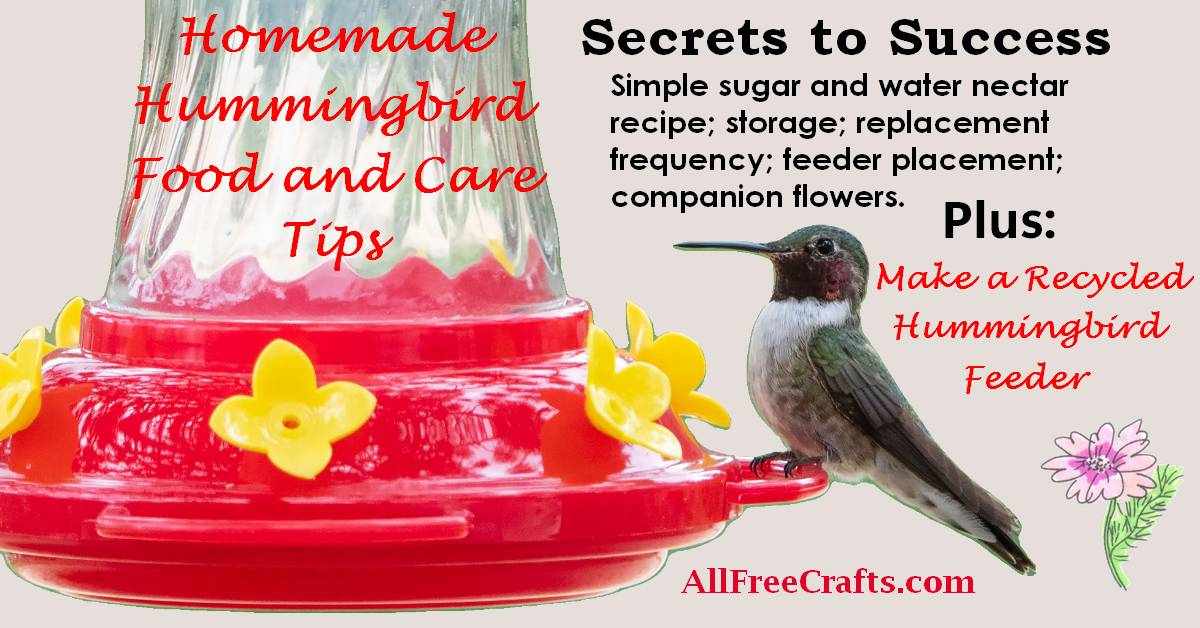
Homemade hummingbird food is a simple mix of sugar and water.

by Jane Lake
Bee balm, hollyhock, hibiscus, trumpet honeysuckle, clematis, impatiens, phlox, purple coneflower, cosmos and fuchsias are some of the common flowers that attract hummingbirds to your garden. But hanging a hummingbird feeder where you can easily see it is probably the best way to observe the lightening-fast hummingbirds in action.
There’s no need to buy expensive nectar. A simple combination of white sugar and water is easy to keep fresh and clear; best of all, it fuels these iridescent feathered creatures every day for epic aerial acrobatics in your own backyard.
TABLE OF CONTENTS:
Scroll down the page to learn how to attract, feed and observe hummingbirds in your own garden. Use the following links below to jump directly to the information you want right now.
Homemade Hummingbird Food
1 part sugar/4 parts water
Boil the water first, then measure and add sugar, at the rate of 1/4 cup of sugar to 1 cup of water.
Let cool and store excess in refrigerator until ready to use.
Do not add food coloring, honey (which ferments), or artificial sweetener, which has no nutritional value.
Keep Hummingbird Food Cool
- Freeze leftover hummingbird nectar in ice cube trays; melt the cubes and bring close to room temperature for use.
- During a heat wave pop nectar ice cubes directly into your usual feeder; the hummers will love a refreshing cool drink on a hot summer day.
Hummingbird Feeder Cleaning Tips
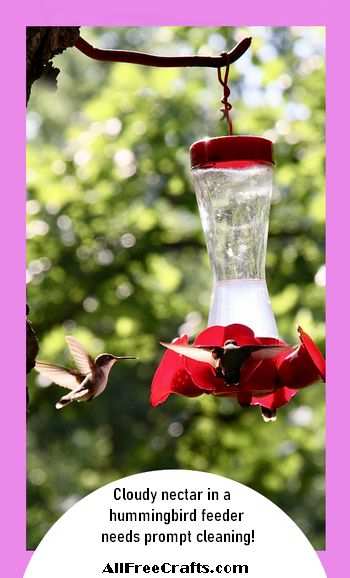
You should clean your feeder at least once a week, or every 3 to 5 days if the water gets cloudy.
The National Audubon Society recommends cleaning a hummingbird feeder by rinsing with one part white vinegar to four parts water.
If the feeder is dirty, add dry rice grains to the vinegar solution for more scrubbing power. Rinse away the vinegar wash at least three times with clear, warm water before adding nectar.
If mold has developed, soak the feeder in a 10% bleach solution (1 part bleach to 10 parts water) until you can’t see any mold. Scrub crevices with a small bottle brush.
Once the feeder is totally clear of mold, rinse it thoroughly with clean water, multiple times, removing any lingering traces of bleach.
Where do I put a hummingbird feeder?
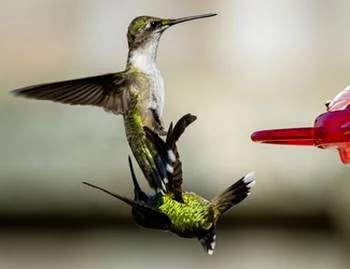
It’s a good question, because hummingbirds are territorial and juveniles will fight incessantly over territory or food, a fascinating battle royal to watch. But you can encourage a friendlier hummingbird community by increasing the number of feeders.
I suggest hanging at least two feeders: one in the back yard and one in the front, thus enticing as many hummingbird families as you can. For safety, place them at least five feet high, out of reach for cats and other predators.
Placement of Hummingbird Feeders in an Apartment
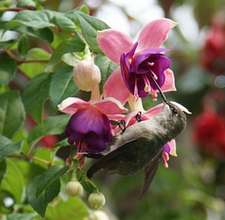
If you’re in an apartment with a balcony, a planted pot of fuchias or a hanging basket of red impatiens will surely catch a hummingbird’s attention; just hang a feeder nearby and they’ll be back to see you again.
The same goes for the front porch of a house; filling planters or window boxes with colorful, nectar-rich plants is an open invitation to these delightful little birds.
Add a sugar water hummingbird feeder and the hummingbirds will soon discover the joys of feeder nectar – a quick, ready source of calories to replenish their energy and sustain their busy existence.
Hanging the feeders in a shady spot discourages fermentation and nectar spoilage. I hang mine under the house eaves because of the shade but also because I can more easily enjoy a close-up view of the hummers as they come to visit.
For more detailed information on the difference between flower nectar and sugar and water feeder nectar, see What You May Not Know About Hummingbirds, by the Bug Squad.
DIY Spray Can Lid Ant Moat
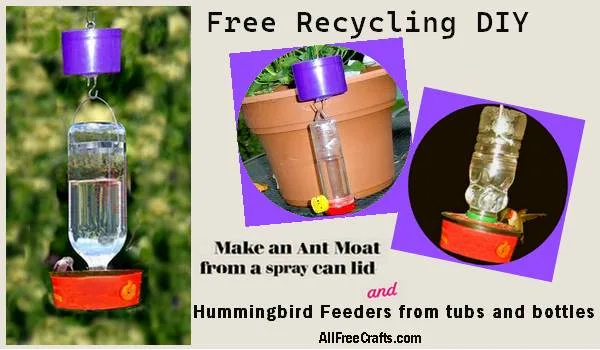
If pesky ants are a problem at your feeder deter them with this quick-and-easy, pesticide-free hack.
You’ll Need: a spray can cap, wire, and silicone caulking or hot glue.
Instructions: Simply drill or pierce a tiny hole in the middle of the cap, just large enough for the wire. Bend a hook on both ends of the wire and caulk around the hole to seal.
Hang the moat, filled with water, right over the feeder; the water barrier prevents the ants from getting into your hummingbird food. Top up water as needed to keep the ants away.
If bees or wasps are competing for the food, use a feeder with bee guards.
For a nature project focused entirely on ants, which are fascinating in their own right, please see How to Make an Ant Farm.
How to Make a Hummingbird Feeder at Home
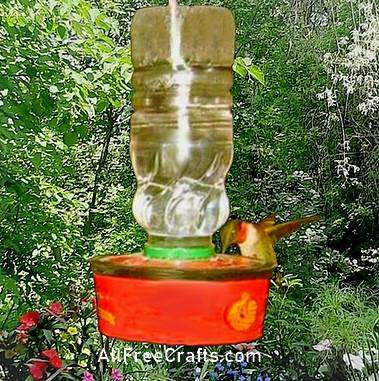
Don’t Buy a Hummingbird Feeder – Make One!
Serve your homemade nectar in a feeder made from recycled or readily available materials. This one is made from a cheese tub, a water bottle, and string.
You’ll soon find other ideas too, including how to make a tiny feeder, perfect for hand-feeding the hummingbirds.
AllFreeCrafts is reader supported! Many supplies are found at thrift stores so try that first! However, if you buy from an affiliate link on this site, I earn a commission at no extra cost to you. As an Amazon associate, I earn from qualifying purchases. This has kept AllFreeCrafts.com online since 2002. Thank you!
Make a Hummingbird Feeder from a Glass Bottle
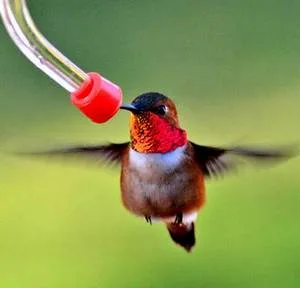
Recycle narrow-necked glass bottles to make your own hummingbird feeders with handy feeder tubes like those shown here from Amazon. They fit into a narrow bottle neck through a rubber or synthetic cork.
I’ve seen pretty wine bottles, painted with flowers, made into feeders with these tubes.
Simply wind craft wire, adding beads, if desired, around the bottles, creating a wire hanger at the bottle bottom. Add nectar then insert a feeding tube and hang upside down. Your homemade feeder is now ready for visitors.
Hummingbird Books and Bookmarks
It’s a Hummingbird’s Life (Amazon): Heart-warming story of the author’s adoption of Squeak, a hummingbird rescued from killer frost. Squeak lives in her sun room until spring, while the author photographs and records what it’s like to interact with “a living jewel among the flowers”.
Tiny Bird by Robert Burleigh (Amazon): For readers aged 5 to 9 (and older people, like me), this beautifully illustrated and informative book celebrates the amazing annual migration of small but mighty hummingbirds.
Bookmarks: For hummingbird fans and book worms: free printable Hummingbird Bookmarks with sketched pictures.
Hummingbird News and Information
Range and Migration Maps
JourneyNorth.org: Track the migration of hummingbirds and butterflies in North America; add your own first sighting of the season.
Hummingbird Central: Range maps including the approximate range of the most frequently seen hummingbird species in the United States and Canada. Read more about migration and report your own sightings to Hummingbird Central.
Caring for Hummingbirds: Health and Safety
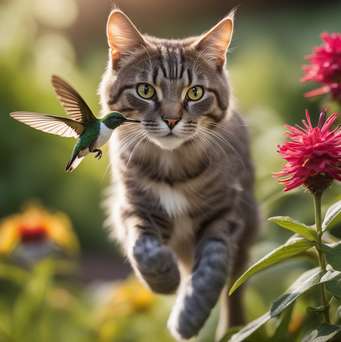
CATS: According to the Hummingbird Society, house cats and feral cats are the most common predator of non-nested hummingbirds.
“To reduce the risks from cats, feeders should be hung high: at least five feet (1.2 m.) above ground, and preferably positioned so that a stalking cat will be quite visible. If you have a cat and love hummingbirds – or any other birds – keep the cat inside!”
~~ Hummingbird Society – Predators
AVIAN FLU: Avian flu has taken a toll around the world, but hummingbirds are at the lowest risk for Avian flu because their feeders are species-specific. If you offer a feeder, however, please be vigilant about changing the nectar and cleaning the feeder regularly (as described above) to eliminate fungal infections.
BACTERIA AND MOLD: Recent research indicates that sugar water in hummingbird feeders can contain high densities of microbial cells but “very few of the bacteria or fungi identified have been reported to be associated with avian disease,” according to ecologist and study co-author Rachel Vannette. However, a tiny fraction of the microbes have been associated with disease, so everyone who provides feeders for hummingbirds is advised “to clean their feeders on a regular basis and to avoid cleaning feeders in areas where human food is prepared.”
Hummingbird Characteristics: Wing Beat and Senses

The wing beat rate of hummingbirds varies by species, with the Ruby-Throated Hummingbird averaging a wing beat of about 53 per second, seen by the human eye as a blur. The wings move in a figure eight pattern to produce the gravity-defying hover effect for which hummers are famous.
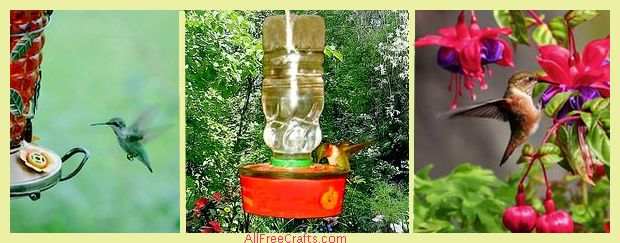
Hummingbirds cannot smell and depend on eyesight to find flowers and food. Inexpensive red hummingbird feeders are readily available at Amazon and dollar stores or make your own. These simple sugar water feeders attract the busy little birds without the need for coloring the food.
Tip: Feeders with a built-in perch encourage the birds to stay a while!
What Do You Call a Group of Hummingbirds?
An interesting question and the answer depends on who you ask. But reddit commentors say a group of hummingbirds can be called a tune, a bouquet, a shimmer, a glittering, or a hover. According to WhatsUpYukon, collective nouns describing hummingbirds include: a charm of hummingbirds, a troubling of hummingbirds, and a hover of hummingbirds. Personally, I was charmed by the title of the birder murder mystery novel that I just read, “A Shimmer of Hummingbirds (Amazon link, by Steve Burrows). Shimmer, and charm, both appeal to me. What do you think?
Bring More Nectar-Loving Creatures to Visit Your Garden
Now that you have the hummingbirds coming along, it’ll be familiar and easy for you to make different formulas of sugar-and-water nectar for orioles and butterflies.
Imagine your garden taking wing as butterflies and hummingbirds pollinate your flowers and the bright orange oriole serenades you from nearby trees on a balmy summer evening. Enjoy.
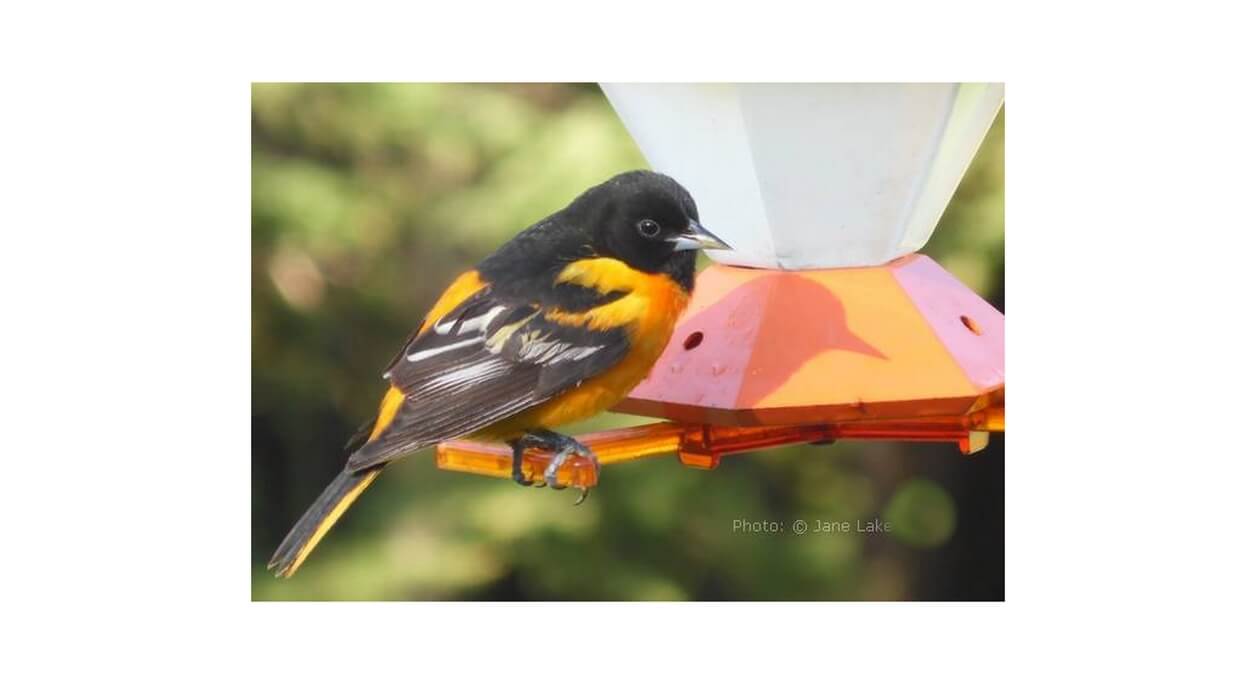
ORIOLES: Using a similar sugar and water solution, you can easily attract orioles to your backyard as well as hummingbirds. Orioles also like an offering of oranges and nesting materials.
BUTTERFLIES: Butterflies appreciate homemade nectar as well as offerings of over-ripe fruit and watering spaces; they’re also attracted to many of the flowers so loved by hummingbirds. See Butterfly Gardening for more information.
Denise says
I make mine concentrated 1to 1 ratio then dilute it when filling the feeders. Takes up less room in my fridge.
It also makes it possible to fill the feeders right after cooking as I use cold water to dilute.
Jane says
Brilliant idea! I will try this soon for my next batch of nectar.
md3md3 says
Great idea!!
MaryLou Andersen says
What can I do to attract hummingbirds in a clear feeder. How can I tint the food without hurting the birds?
Jane Lake says
It’s best not to add food coloring or other dye as that may be harmful to the birds. You don’t mention if the clear feeder is glass or plastic, but I currently have two glass feeders that were colored red on the outside with glass paint, so that’s one possibility.
I’ve also had success in the past by attaching a red silk flower to a plain recycled feeder.
And you could also try placing a hanging basket or planter of red flowers somewhere close to the feeder to attract the little hummers.
Kay says
I’m having trouble keeping my feeders from freezing.
Jane Lake says
Hi, Kay,
I’ve had that issue in the fall as well. I moved one feeder out from under the eaves of the house into a sunny spot and that helped a lot.
Other than that, I’d suggest making fresh nectar with warm water and setting it out in late morning. It might still freeze but the hummers will at least have some opportunity to feed from it for a few hours.
jhughey says
I usually have 4 feeders, two on the front porch and two on the back deck and they all get a lot of traffic. I can see both front and back, from my recliner chair, depending on which way I turn my head. I love the little birds and love watching them enjoy my feeders!
Jane Lake says
Your recliner would be my favorite chair in the house! I have two feeders on the front porch, and two on the back deck as well. But I can only see one area at a time. One feeder is right outside my kitchen window though, so I do get a close-up view of the hummingbirds there!
mary crouse says
I moved this year, and was concerned that I may not get any hummingbirds this year since they like to return to the same location each year. I made the nectar 1:4 ratio, and hung up my feeders anyway. Put a red geranium plant under it and was rewarded by a visit shortly afterwards. Few and far between at first, but I saw five visitors today! Hopefully, some will nest close by, and make our yard their home.
Jane Lake says
That is so sweet. I had the same concern after a move several years ago. By the second year, I had more hummers than ever and was feeding some every day by hand.
I do hope the same for you!
Lisa Hayes says
I place flowers below my feeder also.
Michael E Moir says
Does anyone know of any thing else we can do for HBs in the extreme cold? We are in the teens here and the temp dropped out of no where! We still have HBs coming to our feeders but I don’t know if they will survive this cold.
Jane Lake says
Hi, Michael,
Where are you located? Are the hummers migrating through your area or are they expected to stay around? They can survive some cold temperatures, especially if they have food available, so please don’t take it away.
Cindy says
I put up a feeder and have 3 hummingbirds that love it. Its 100 degrees today and although it hangs under the eves of my house in the shade can the liquid get to hot for them? I took it down to put new food in it but I’m afraid it will heat back up and again and get to hot!
Jane says
In very hot weather change the ratio of water to sugar to 5 to 1, rather than 4, to help the birds keep hydrated. I’ve heard of people experimenting with feeders, putting refrigerated nectar out in one and leaving another just out in the shade to see which the birds prefer. Results vary, and I tend to think the birds know best. You may notice more activity in early morning or late evening when the temperature is cooler. Lots of people have tried ice chips made from nectar, but this is a short lived solution too. Just take care to changer the nectar at least three times a week in hot weather to disourage mold. Offering the hummers a nearby fountain or mister also helps these busy little birds cool down.
Cindy says
Okay, thank you. I buy the pre-made liquid food. And when its hot outside I have been changing it every other day as I also don’t fill it full, this way I have to change it often. I have noticed that are out more in the morning and evening when its hot.
Myrna says
How late can you fill the feeder in the Nebraska area? Don’t want to tempt them to stay too long!
Myrna
Jane Lake says
Actually, Myrna, you may keep the feeders up until you see the very last hummingbird, and I often keep it up a little past that and am rewarded by yet another sighting. The feeders are quite busy now, as the hummers fly south for the winter, and all the feeders along the way are helpful in renewing the energy needs of these busy little travellers. So enjoy your feeder as long as you can!
Liz Klemens says
I was thinking of using coconut palm sugar, do you think that would be ok? Thanks, Liz
Jane Lake says
I’m unfamiliar with coconut palm sugar, but perhaps someone else will let us know!
walking dead fan says
Hi I am new to this and I just changed my nectar but I am nervous because I think the nectar was too hot. The hummingbird fed a few hours ago and hasn’t come back. Could I have injured it? Thanks for any input!!
Diane says
I will be going away for 3 weeks and my wonderful neighbor is going to keep my hummer feeders filled for me. Will my homemade nectar be OK in the fridge for that long?
Jane Lake says
Yes, I think it will be fine! Have a great trip – and I bet your neighbor will enjoy the hummers’ company while you are away!
Diane says
Thanks so much! You have put my mind at ease. I will miss my “babies”. They are an amazing source of entertainment!
Ken W says
I use TreeTanglefoot on the wire holding up the feeder. It is sold in nurseries as Bird Repellent but it used to be sold to keep crawling insects off of trees by putting a bead of it around the trunk. A little dab will block ants for a long time.
Jane Lake says
That’s a very useful suggestion and one that I haven’t seen before, so thank you so much for sharing it here. I have one feeder where the ants are unbelievably creative. Perhaps this will stop them in their tracks!
Peggy Gilmour says
If you coat the string holding up the feeder with Vaseline the ants will not cross it. We have found it very effective for the past three years and the birds don’t bother with it.
Jane Lake says
Thank you, Peggy. You haven’t had any issues with hummingbirds getting the petroleum jelly on their feathers? This possibility would concern me.
Beverly Thompson says
I have seen my first hummingbirds this year in North Carolina
Jane Lake says
I’m so sorry, Beverly, I missed this comment completely. I hope by now that you’ve had lots of hummer visitors!
Andy says
Hi, I just got my feeder and am wondering if I can use the pure cane sugar? Any information would greatly be appreciated. TY
Susan Bunker says
A hummingbird surprised me on my porch today flying within 3 feet of me! Didn’t know they were even in the area. I’m off to Walmart tonight to buy a feeder . Appreciate all the tips I’ve found here. What is the migratory period you mention? I live in the Chesapeake Bay area.
Jane Lake says
Congratulations on getting your first hummingbird feeder. You’ll love these little visitors! Hummingbirds migrate north in spring, arriving in some parts of the southern states in February and reaching Ontario in May. They start the journey back to Mexico and Central America in the fall, from August through October. The little birds travel alone, rather than in a flock, and during these long, arduous journeys they appreciate a slightly sweeter nectar, made with one part sugar to three parts, rather than four parts, water.
William Baumgardner says
For some reason, the last 2 batches of hummingbird nectar I have made turned cloudy even before I hung the feeder up. I clean it regularly as required, but these 2 batches were cloudy from the git-go. And the nectar I make is done the same way as I have done for 2 years. This is puzzling. I know all about the dirty feeders and mold causing this, but those 2 issues aren’t the cause in this case. Any ideas would be welcome.
Jane Lake says
Sorry for the delay in responding. Does the cloudiness disappear if you let the nectar sit for a while? If so, it could just be tiny air bubbles in the water. I wouldn’t worry about it too much; as long as your water is drinkable and the sugar is the same as always, it shouldn’t be reason for concern. Cloudiness after a couple of days, especially during hot weather, is the beginning of mold and the feeders should be cleaned and refilled with fresh nectar.
Betty says
Loved your site and all the valuable information provided by you & others. There was a person that asked a question about whether it mattered if the feeder was in direct sunlight or not; I did not see an answer to their question; unless I missed it some-how. The said the sugar water rose to slightly over 100 degrees by late afternoon; and wondered if there was an ideal temp. that the little hummers like their nectar. Curious about the answer if you or anyone knows. Thanks so much.
Jane Lake says
Hi, Betty, I’m not sure about the exact temperature, but it’s definitely best to set out a hummingbird feeder in the shade, if possible. If the only option is in direct sun, then be aware that the nectar will need changing more frequently to prevent fermentation and mold. If the nectar gets too hot, then the hummers will likely avoid the feeder in the heat of the day, visiting more frequently in early morning or evening when temperatures are cooler.
One of my friends created shade for her hummingbird feeder by sticking a lady’s summer straw hat on top of the shepherd’s hook that held it. She even attached a red silk flower to the hat to attract their attention. So cute – and very effective!
Susan Montague says
I love the idea of the hat! I’m going to try it
Paul says
Honey bees and hummers eat the same nectur. Bee Keepers use 1 to 1 mixture
Jane Lake says
I did not know that bee keepers feed their bees with nectar. One to one is very strong. I think a ratio of 1 to 3 is the strongest you should go for hummingbirds, at the beginning and end of migration season when their energy levels are high.
Betty says
Enjoy the notes. I just got my first feeder. Noticed the notes are from 2015 –How about 2016 ?
Jane Lake says
I’m hoping more people will comment this year and share their stories. Once you get visitors to your first hummingbird feeder, you’ll be watching for them every day. My mother, who is 80, can’t wait for the first hummer to arrive in the spring. It’s a highlight for her. I hope it will be for you too!
Judy Kays says
Can You use powdered sugar for nectar?
Jane Lake says
Apparently, powdered sugar, (also called icing sugar or confectioner’s sugar) has fillers that are not recommended for hummingbird nectar.
Steve n peg says
We’ve been fixing feeders for last 4 years, I sit out on porch where feeder hangs and love to watch them fuss over who gets to use it
Jane Lake says
I love watching their aerial antics too; it’s better than watching an air show. They have favorite perches for keeping an eye on “their” feeder and swoop in as soon as another hummingbird comes too close.
kathy says
i bought red food dye to add to the food because my neighbor and sister said its important. you say not to use dye. why?
Jane Lake says
There is a lot of controversy about this. The Audubon Society says red food dye may not be good for the hummingbirds. One theory is that it damages the kidneys and liver. Red dye also serves no useful purpose, because the hummers come just as readily to a hummingbird feeder with clear nectar as they do to those with red dye. For these reasons, I prefer to err on the save side and refrain from adding food dye to the nectar.
robert Bennett says
Skip the food dye but if you want colored water just add rose petals or wrap the clear part of the feeder with red plastic wrap like Reynolds plastic wrwp.
IRENE PAINTER LIPPITT says
KATHY: DO NOT USE DYE OF ANY KIND FOR HUMMINGBIRDS, THEY CAN BE TOXIC, DAMAGES THEIR KIDNEYS AND LIVER, YOUR FEEDER IS BRIGHT ENOUGH….YOU SHOULDN’T BE EATING ANYTHING WITH DYE IN IT EITHER…THIS TIME YOUR NEIGHBOR AND SISTER ARE “WRONG”………
Jane Lake says
I think you’re right on this. I’ve read some awful things about red food dye lately.
Jenny Fahey says
I have two feeders 1 is clear no color and the other one is the red color with the little flowers 4 of them tonight I had the most hummingbirds I have ever had at least 10 maybe 12 but they move false and are hard to count. The favorite feeder is the clear one, go figure. They bring such joy and entertainment to my husband and I. I really enjoy them.
Jane Lake says
I have the same problem counting them, but I’m sure that I’ve never seen ten of them around here. You’re lucky! My husband and I both love seeing our hummingbirds too. I agree. It’s a priceless joy.
Cocoa says
Several friends have hummingbird feeders and really enjoy them. So we decided to try one this year. Cocoa, the cat, really enjoys watching them, but they’re often too fast for his keen eyes. We have one very dominate female that has decided the feeder is hers. She won’t allow other females or even the males to use the feeder or to sample the nectar in nearby flowers. In fact, sparrows that get too close to the feeder are also chased away. When not using the feeder or sampling the nectar of nearby flowers, she sits for long periods of time on a branch of a nearby tree and watches for others entering her territory.
We may try a second feeder next year that is placed where she can’t see it from her observation points.
We have a question — does it matter if the feeder is in direct sunlight, or should it be somewhat shaded? Currently the feeder gets mostly sunlight during the day and the sugar-water temperature rises to slightly over 100 degrees by late afternoon. Is there an ideal temperature that the little hummers like their nectar?
Thanks
David Pierce says
“A hummingbird Is more likely to stay at a feeder when it first arrives if the feeder contains a relatively rich sugar solution. A 60 calorie solution can be mixed for this purpose with equal volumes of sugar and water (1:1 ratio). This high concentration is important to replenish energy reserves during migration, and to fuel the territorial exploits of males and nesting activities of females.”
I use 2 parts water to one part white cane sugar. I find it greatly increases hummingbird activity. The standard 4 to 1 does not result in much interest from the birds.
David
Jane Lake says
Hi, David, I worry that you are depriving the hummingbirds of the nutrients that they receive from plant nectar, as opposed to sugar water. While it is true that the hummers will prefer a stronger concentration of sugar water, and therefore you may enjoy seeing more visits to your feeder, this also means the little birds spend less time seeking more natural sources of food. I plant my garden with flowers that attract hummingbirds, and always have a basket of their favourite flowers below my porch feeder, and I find they will hover among the fuchsias and then perch on the feeder. After which, they generally fly off toward my roses, or purple coneflowers, or whatever is blooming at the time. I love watching them in the flowerbeds as much as I do at the feeder, and I have trained them to come feed from my hand as well.
A stronger solution of sugar water can be a good idea in the first weeks of arrival, and in the last weeks before they head down south, to bolster their caloric needs during migration. But other than that, I like the traditional 4 to 1 recipe.
kris says
please switch to Organic Sugar as the white sugar is GMO
emily burford says
I was making the nectar too sweet or so my sister-in-law told me she said it would kill the birds is there a chance of that happening
Jane Lake says
Can I ask how sweet? How much sugar were you using with how much water? I doubt that you have endangered the little birds, but see my reply to David, above, about the reasons for the keeping the solution more or less four parts water to one part sugar. I reduce the mix to three parts water and one part sugar for the first week of migration, when the birds are arriving, and the last week or so before they leave to fly south.
Dell Lewter says
Can you use confectioners sugar in place of regular sugar?
Jane Lake says
I’m not sure. I think it would be ok, as I believe confectioners sugar is more or less the same as white sugar, in powdered form. For this reason, I personally would reduce the concentration, because you’re going to get more confectioners sugar in a quarter cup than you would regular sugar as it is more dense. Try one part confectioners sugar to five parts water and see how that goes.
Alison in Indiana says
No, confectioners’ sugar has fillers.
Jane Lake says
I did not know that. Thank you, Alison, that’s useful information!
Maria says
How long will the home made food last in the refridgerator? Thank you for the information..
Jane Lake says
I have kept hummingbird nectar in the fridge for about a week. It was fine, but I wouldn’t use any syrup that looks cloudy or moldy. The nectar is so easy to make that it’s really best to make it fresh each time. Also, if the syrup in your feeders begins to look cloudy, replace it quickly. The hummingbirds will quickly catch on, and you’ll end up with more visitors to your feeder. They definitely prefer fresh food!
Michele W says
This is the first year that I have put out a humming bird feeder and I’ve been making my own nectar. I was so happy to look out and see my first humming bird. They are so fast you can not really tell what ones they are. I got my camcorder and was able to catch it on there and could see it perfectly. It is a Ruby throated female. A week or so later I finally seen the male with his bright red throat. They are so beautiful to watch. I have filmed them so I can see the details of them. I have bird feeders out by the humming bird feeder too. The one day I was filling up the bird feeders when I heard this buzzing beside my head. I’m allergic to bees so I waved my hands and yelled. Only to see it was the humming bird right beside me!! I felt so bad that I probably scared it. The next day filling the bird feeders, I hear the same buzzing. I look up and sure enough its the humming bird flying around me. I was baffled at why it always flys around me and my husband said,” it must be your red hair they are seeing.” Who knows why but it’s pretty funny sometimes. I am planting all kinds of flowers they like too around the area so they will have more to go for. I’m glad I got into doing this.
Jane Lake says
Hummers can get pretty tame. I haven’t had time this year, but in previous years, I’ve got the hummingbirds to come to my hand and feed. I just sat quietly near the feeder, and held a red bottle cap in the palm of my hand filled with nectar. Imagine my joy the first time one of the birds landed on my hand and sipped at the nectar. Such a magic moment!
Viki says
I made a batch with 1/4 c sugar to 3/4 c, water. Thought I remembered recipe but looked up and reLized it 1/4c to 1 c. Water. Would that be why hummingbirds weren’t returning because it was too sweet?
Jane Lake says
The hummingbirds probably thought your nectar was delicious, but because it had more sugar in it, it’s likely that they didn’t need to return as often. They need a lot of energy, it’s true, but the 1 to 4 ratio is closest to nectar they find in nature. A sweeter syrup in the feeder is sometimes recommended during migration season, when the little birds are travelling long distances and may not have readily available sources of natural nectar.
Pat says
We were just given a feeder on Sunday. I made the nectar and am enjoying seeing them feed. I never knew we had any around here. Love your site!
Jane Lake says
Thank you, Pat. Always like reading positive feedback, and I’m so glad you’re pleased with your hummingbird visitors.
Bobbie says
Can I use well water or softened well water to make the nectar?
Jane Lake says
I’ve used well water for over 25 years, both softened and unsoftened, so go ahead. Assuming the water is potable (drinkable by humans), it should be fine for the little birds.
emma hughes says
I am having trouble with bees. Tried everything I know. Clean feeder daily. Sprayed with cooking oil. Bees still swarm the feeder. Never had this problem before. And suggestions?
Jane Lake says
Are they bees or wasps? You might have some success if you place a wasp trap filled with heavy sugar syrup somewhere nearby, hopefully tempting them away from the hummingbird feeder. You can buy these, or make your own from a plastic bottle. Cut the top few inches from the bottle, turn it upside down and insert this funnel shape back into the bottle bottom. Staple together and fill the bottle with a couple of inches of syrup. I’ve used these with great success to control yellow jacket wasps. Hopefully, it will also work for you. Good luck!
ralph says
I applied some Crisco on the feeder, No More Bees. Do not place any near the feeding holes, so the birds don’t get any on themselves
Julie says
I usually try to have some bright RED flowers nearby. They will work them too.
Jane Lake says
I do the same, Julie. I have my front porch feeder hung above a flowering basket. Fuschias worked well for me last year; the birds hovered among the flowers then perched on this feeder. This year, I’m trying red geraniums.
Wilma says
Our hummingbirds have been getting increasingly mad at us because we haven’t put the feeder out yet. I want to make the nectar myself rather than using the store-bought red mix as we have in the past. I went looking for the recipe and found your site. I’ll be making some tonight so I can put it out in the morning. Hopefully they will quit hollering at us once we get it put back up.
Jane Lake says
They will love you for it. Happy hummer season!
Wilma says
They have been here all day and they are fighting over it. We’re going to try making one of the homemade feeders and see how they like that.
Don says
Can honey or agave syrup be used to make a hummingbird mix?
Jane Lake says
I would avoid both. Honey can ferment in hummingbird feeders and that’s a definite no-no. Agave syrup isn’t as appealing to hummers, spoils faster, and can also start fermentation within the feeder. Plain white sugar is best, on a one to four ratio with water.
Gail Hopkins says
To keep ants from feeders, I take the pie plates that come with frozen pastry, add four long Christmas ball hangers and with holes punched through the edges of plate attach to the perches on feeder. Fill pie plate with water, keeps ants away for days.just add water as evaporation requires.
Suki says
Thanks for all the helpful tips. I was given some packets of instant coconut water – the ingredients are: sugar and dried coconut powder. Would the coconut water be good for the hummingbirds?
Jane Lake says
Now this is a question I haven’t heard before, and I’m sorry, but don’t really know. I think that I’d just stick to plain sugar, as I’m not sure if the coconut powder could start fermenting.
teresa markert says
Is there somewhere special that I should hang my feeder? I use to place it on the front porch but they won’t come in to it. I am going to try homemade food this time. Thank you.
Jane Lake says
I have one on the front porch also, and I see the hummers coming throughout the day from the window in my front door. I always place a basket of flowers attractive to hummingbirds somewhere close to the feeder; I’ve tried fuchias, red geraniums and even a mixed basket one year, all with equal success. If you don’t have room for a basket, or don’t have the time to care for a basket, you can also try tucking a red silk flower somewhere nearby. Good luck.
Paula Baker says
Just be patient. The Hummers will find your feeders. It may take up tp 3 weeks. Try a 3 to 1 solution to attract. They won’t have to come back to the feeder as often.
Kathy says
Saw my first hummer of the season last week and looking forward to the rest of the season. These little angels make my day.
Jane Lake says
Me too, Kathy. I was hand feeding the hummingbirds for two years and but didn’t do it last year, but I might try again this season. My dream is to find a nest that I can watch for a while, but so far I’ve never found one.
sarah says
Just want to say “thank you” for making this available without charge. I had the recipe before but could not find it and could not remember if you boil the water first. Again, thank you for sharing.
Jane Lake says
You are most welcome, Sarah. I’m always happy when someone tells me they put out a hummingbird feeder and used my recipe page to make the syrup. It’s so easy that it’s also easy to forget. The more hummingbird feeders we get filled this season, the better! I hope you get lots of hummers visiting this summer.