Last updated on May 17th, 2026 at 04:04 pm
How do you determine the right height and hole size for a bird house?
Much depends on the type of birds you want to attract.
A well-built birdhouse should be durable, keep out the rain, not overheat, and be easy to clean. It should also satisfy the particular needs of nesting birds in your area. Keep these requirements in mind and let’s get started on your bird house building plans.
First, determine the types of birds you see around your backyard. Then figure out which ones will use a birdhouse. Some birds build nests in trees or bushes, such as doves, cardinals, and mockingbirds. Others may make their nests on the ground or even in burrows down in the ground.
Only cavity nesting birds will use a birdhouse. Examples of common cavity nesting birds are chickadees, flickers, swallows, woodpeckers and bluebirds.
Determine the type of bird that you wish to attract and build a birdhouse to suit. You can follow the plans for this simple homemade woodpecker house but attract different kinds of woodpeckers depending on the dimensions you choose from the following chart.
Bird House Dimensions Chart and Specifications
Determine the dimensions of the birdhouse. Most species of birds require specific sizes of bird houses as well as entrance holes. Below you will find a chart with some specs to build houses for various common cavity nesting birds:

When selecting the wood to use, use plain untreated lumber. Do not use exterior grade plywood, which contains formaldehyde, or pressure-treated lumber which contains toxic preservatives. Plastic and metal often overheat in the hot summer sun.
Never use paint or stain inside the bird house. If you want to paint the outside, wait until it is built and paint only the wood that you can see. Be sure to use a non-toxic exterior latex paint that does not contain lead. Light colors will reflect the heat and light, keeping the house cooler in the summer. Or keep the house natural, without paint. Rough cedar or redwood are excellent, long-lasting, natural wood choices if you want to go paint-less.
Bird House Check List
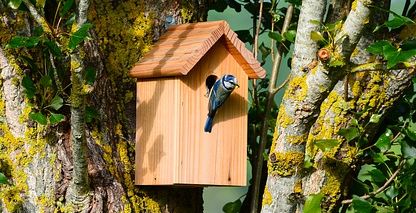
It’s almost time to pick out a birdhouse plan, but be prepared. Good bird houses have certain characteristics in common. Use this check list to make sure that your bird house plan fits the bill.
- Look for built-in ventilation holes or slots near the roof so heat can escape. Normally these holes will be on the sides of the house, not the roof, so rain doesn’t drip inside.
- The roof should be slanted enough to shed rain and extend well over the entrance hole for protection against rain and sun. You can recycle plastic bread ties to make a tiled roof for a bird box.
- The bottom of the nest box will need drain holes or slots for drainage.
- One section of the bird box, whether it’s the door, roof or a side wall, should easily open to clean out the nest box at the end of the season. Leftover nests can attract mites and other parasites as well as make more work for new occupants who must clear out the old nest.
- Ideally, the inside walls should be roughed up or have some types of grooves for baby birds to climb as they get ready to leave their nest.
Location, Location, Location!
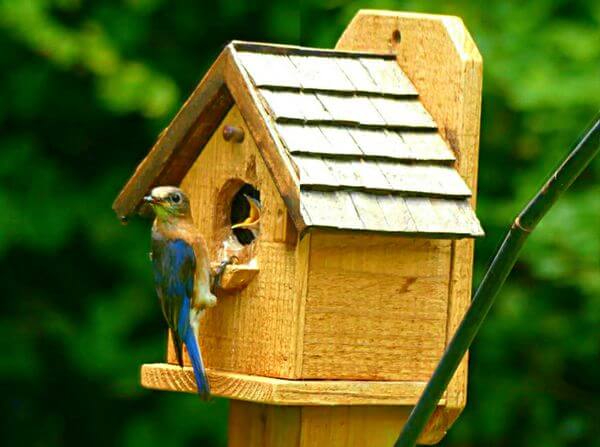
Now it’s time to put up your birdhouse. They can be attached to wood or metal fence posts, trees, or their own wood or metal posts. Bluebird boxes seem to attract more predators when on trees.
If you are mounting your birdhouse to a post, always try to attach a baffle or collar to prevent snakes, cats, and other predators from climbing the pole to the house.
Locate multiple bird houses an adequate distance away from each other since most nesting parents are territorial. Place the birdhouse where the parents and baby birds are not distracted or worried about your family’s activities.
The entrance should face away from the prevailing wind. Remember, bluebirds prefer lots of open space in front of their birdhouse and be sure to mount the house at the proper height for the birds that you want to attract.
Resources and Related Posts:
Rudy says
Love your web-site, I have found lots of great new ideas,
Thank you
Rudy
Payette, Idaho
Jane Lake says
What a lovely way to end the year. Your comment is much appreciated. Happy New Year to you, Rudy!